
Yoyotl Eztli
Between Earth and Cross
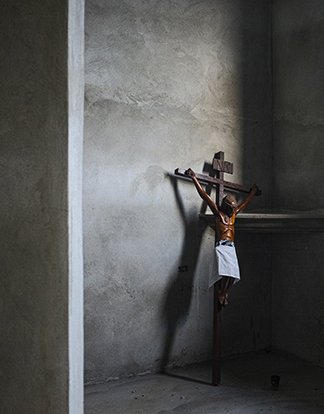
Yoyotl Eztli.
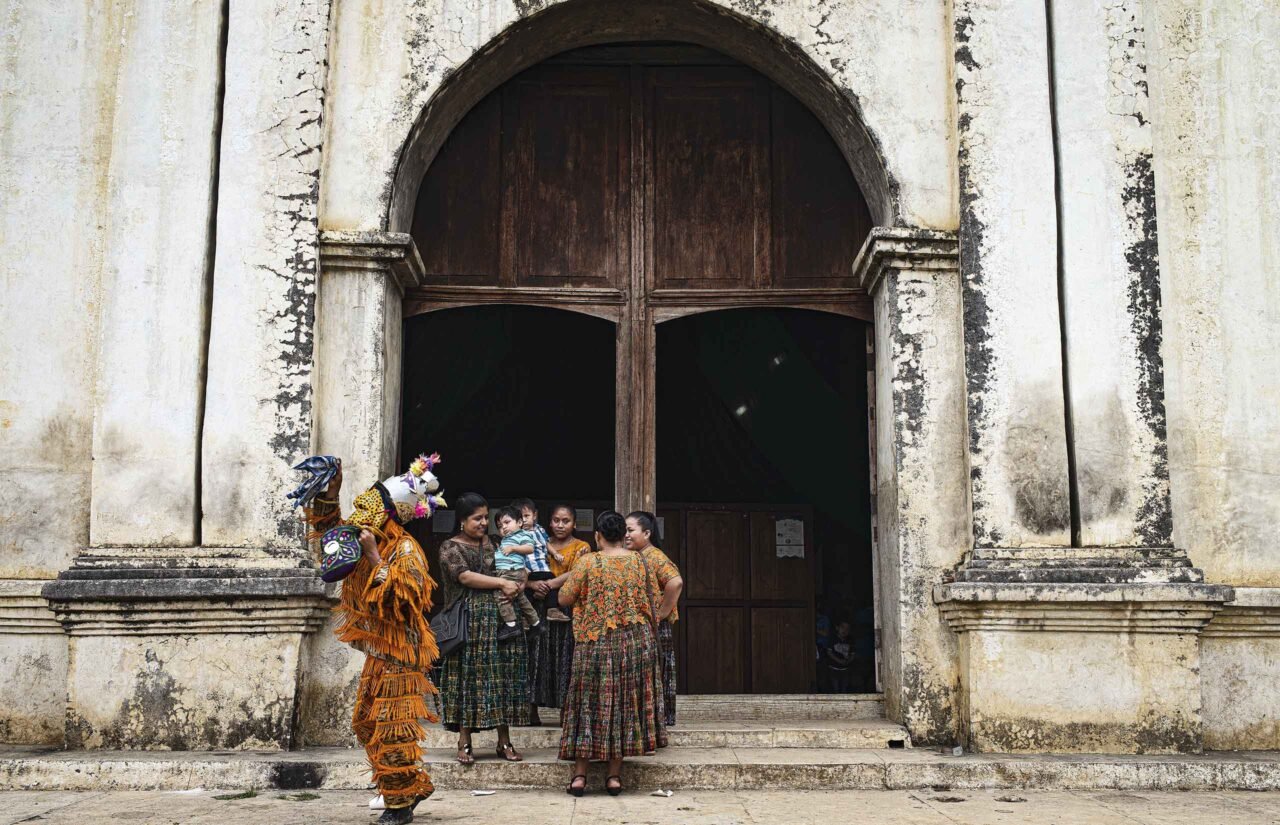
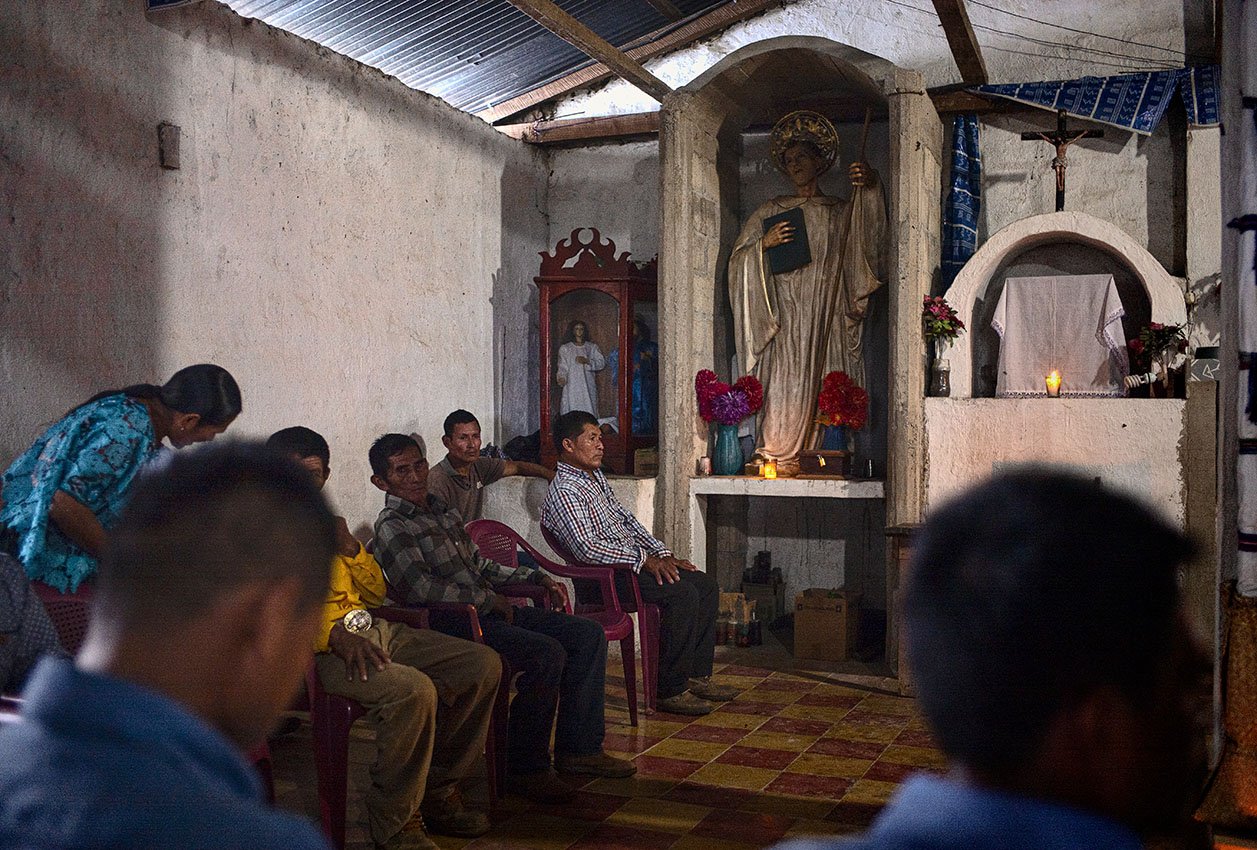
In this Maya Chontal community in Guatemala, every ceremony is shaped by religious syncretism—a living expression born from the encounter between Indigenous Maya spirituality and the Christianity imposed by Spanish colonizers.
This process began in the 16th century, when missionaries attempted to eradicate what they considered pagan beliefs. Churches were built, often over ancient ceremonial sites, in an effort to replace one worldview with another. Yet what emerged was not disappearance, but transformation.
Rather than abandoning their spiritual practices, they absorbed elements of Catholicism, reinterpreting them through their own cosmology. What endures today is not a contradiction, but a layered belief system—coherent, lived, and deeply rooted in the land.

In the ceremonies documented here, syncretism is not symbolic—it is structural.
Indigenous communities adapted.
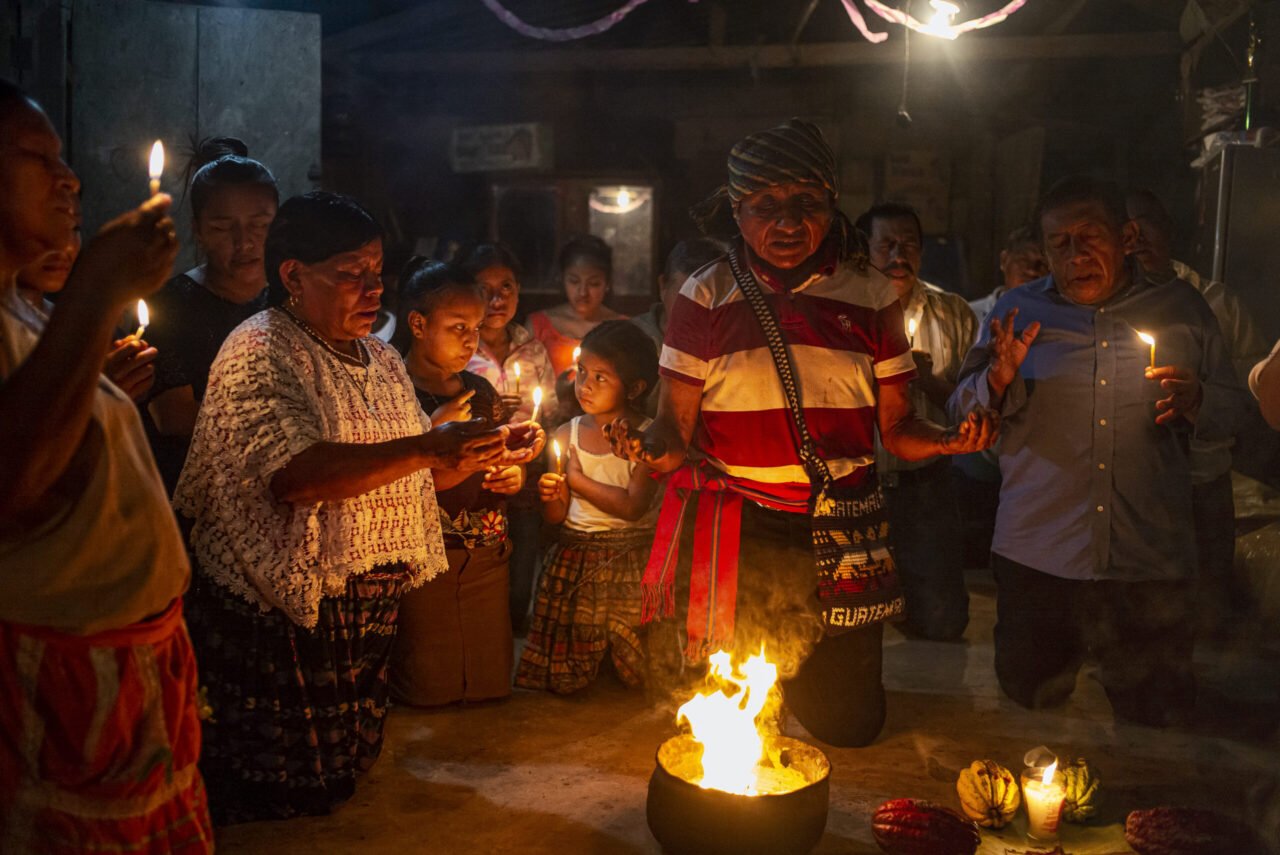
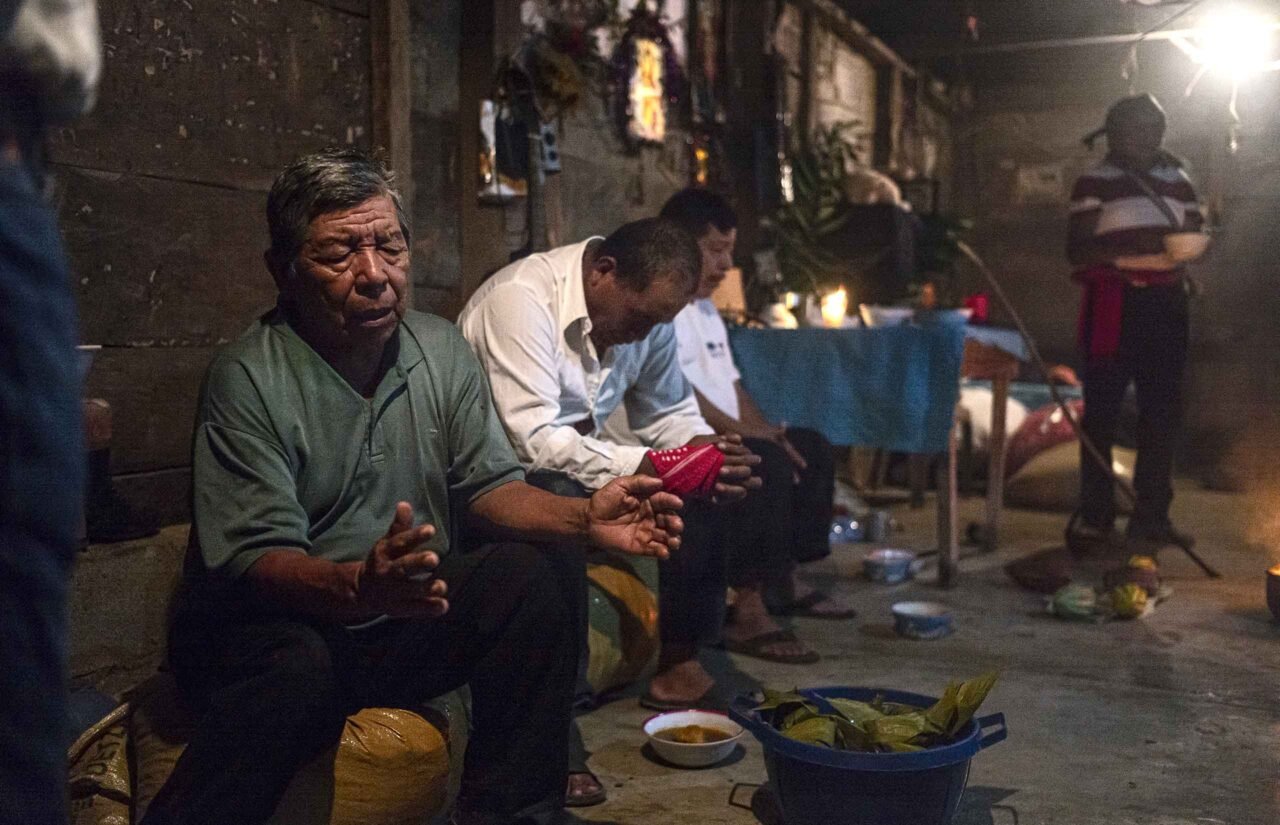
Rituals begin close to the earth. Offerings are placed, smoke rises, and words are spoken to the unseen. Among them, the ancient deities of agriculture—still invoked, still present.
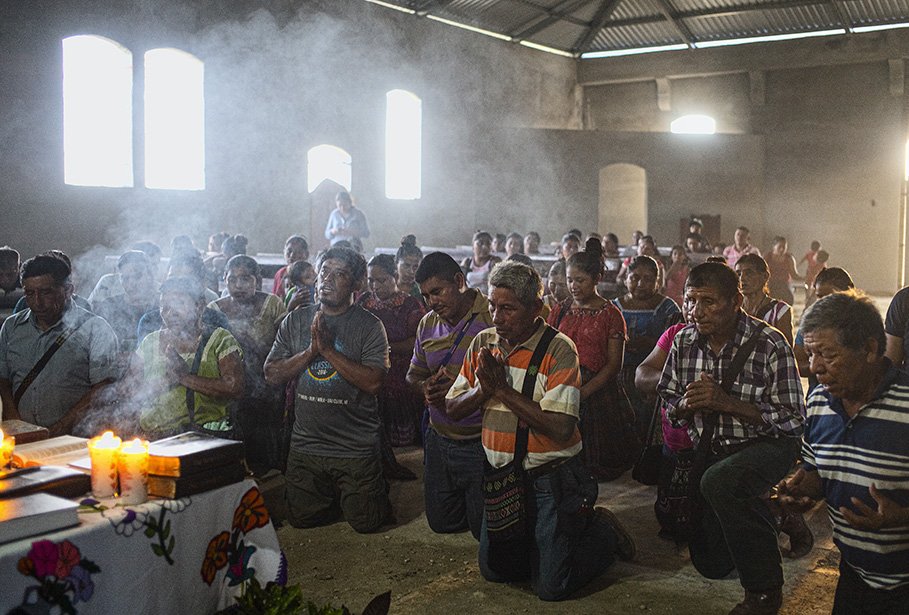
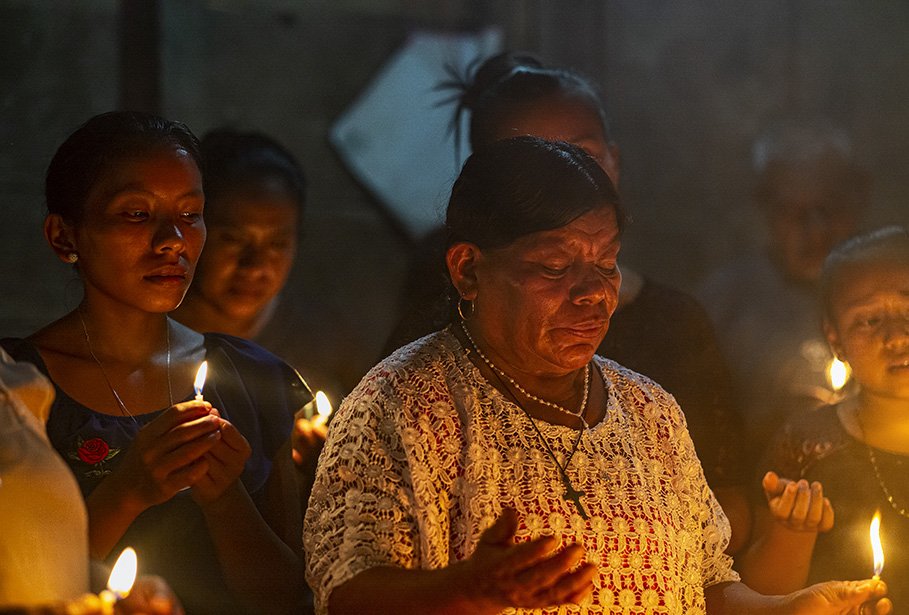
An old prayer survives:
Ixcacao, born from the fruit of the cacao tree.
Ixcankl, goddess of the seed, hear me.
Ixtoq, goddess of the rain, help me.
Ixcacao, goddess of chocolate,
see my tears and come to my aid.
Fertility, rain, and harvest.
Ixcacao—born from the fruit of the cacao tree—is invoked alongside other forces that govern fertility, rain, and harvest. In this context, cacao is not merely food; it is sacred substance, a bridge between worlds.
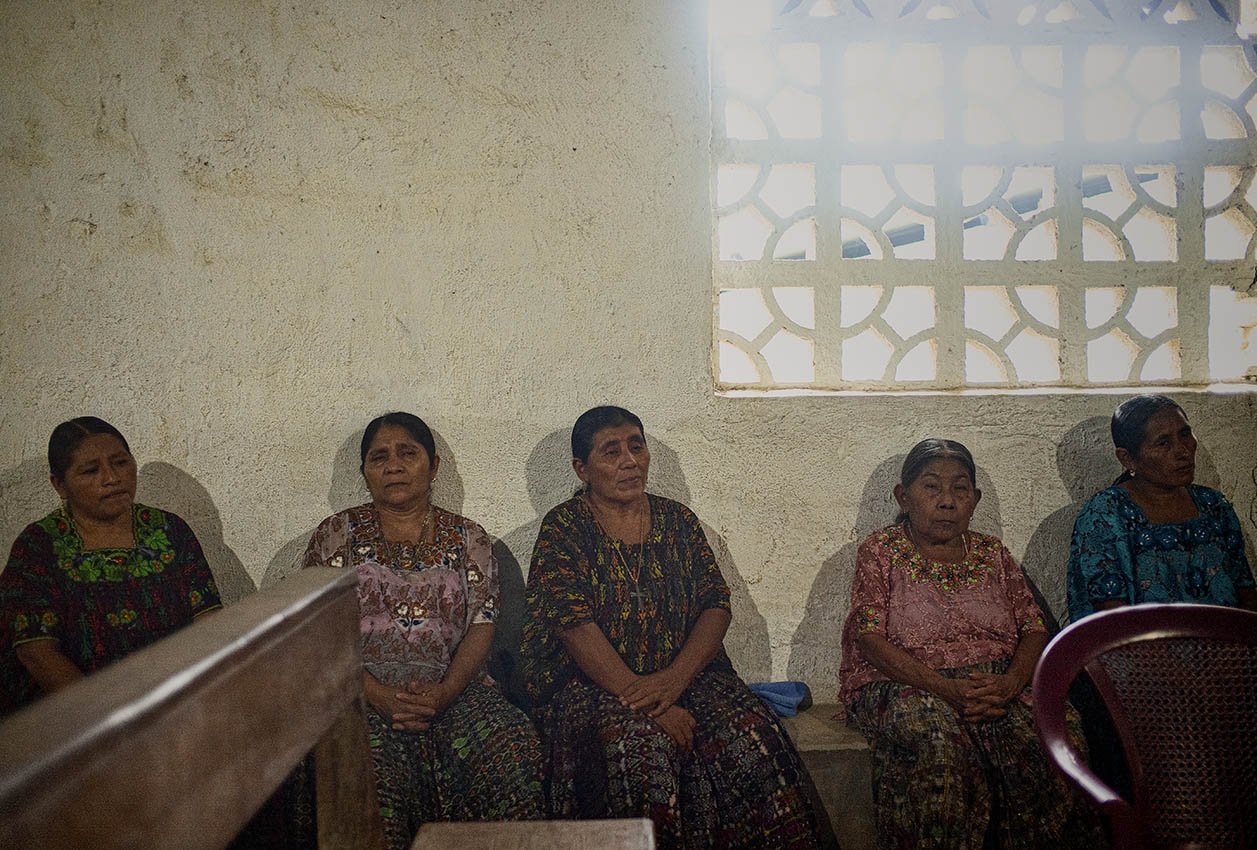
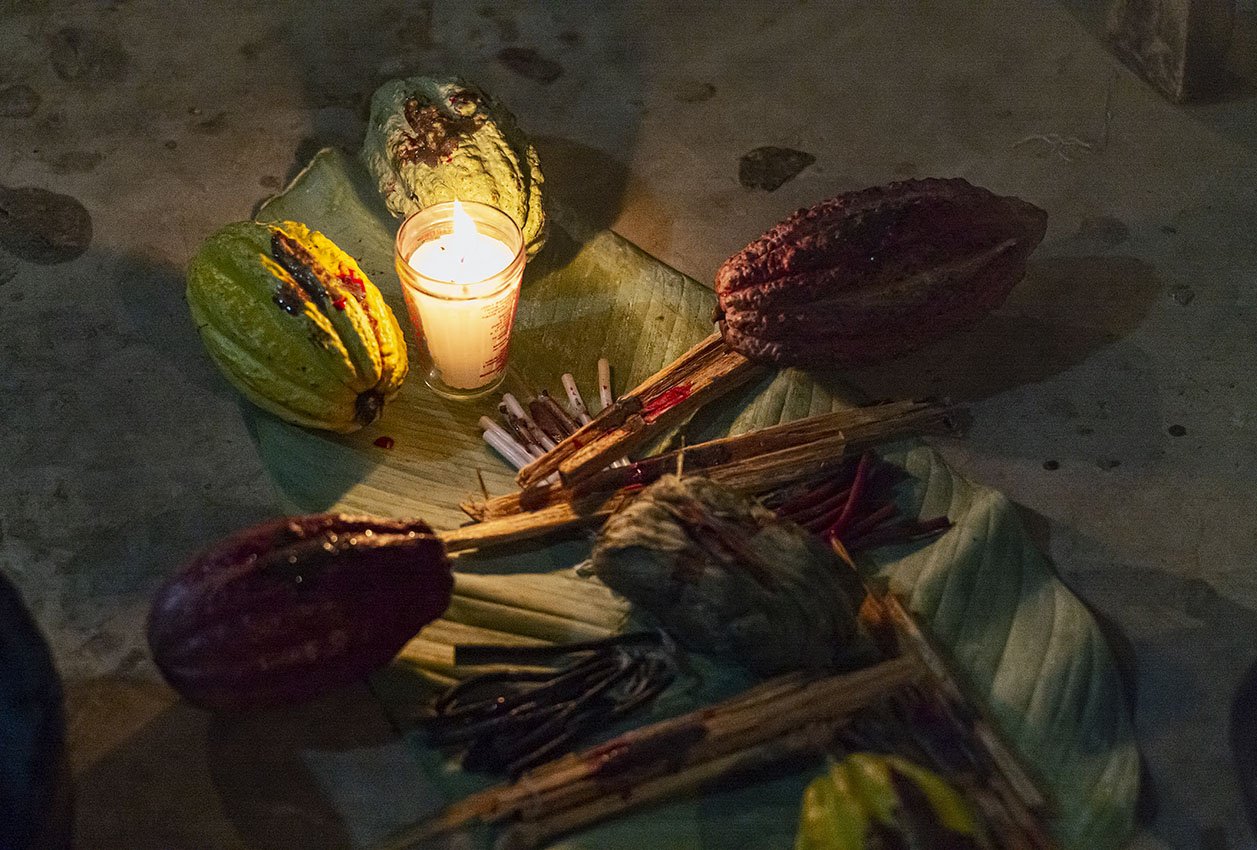
The foods of the gods.
In the Popol Vuh, cacao is described as one of the foods of the gods. Across Mesoamerican traditions, it is also known as Yoyotl Eztli—the blood of the heart, the blood of the Mother Earth, the blood of the ancestors.
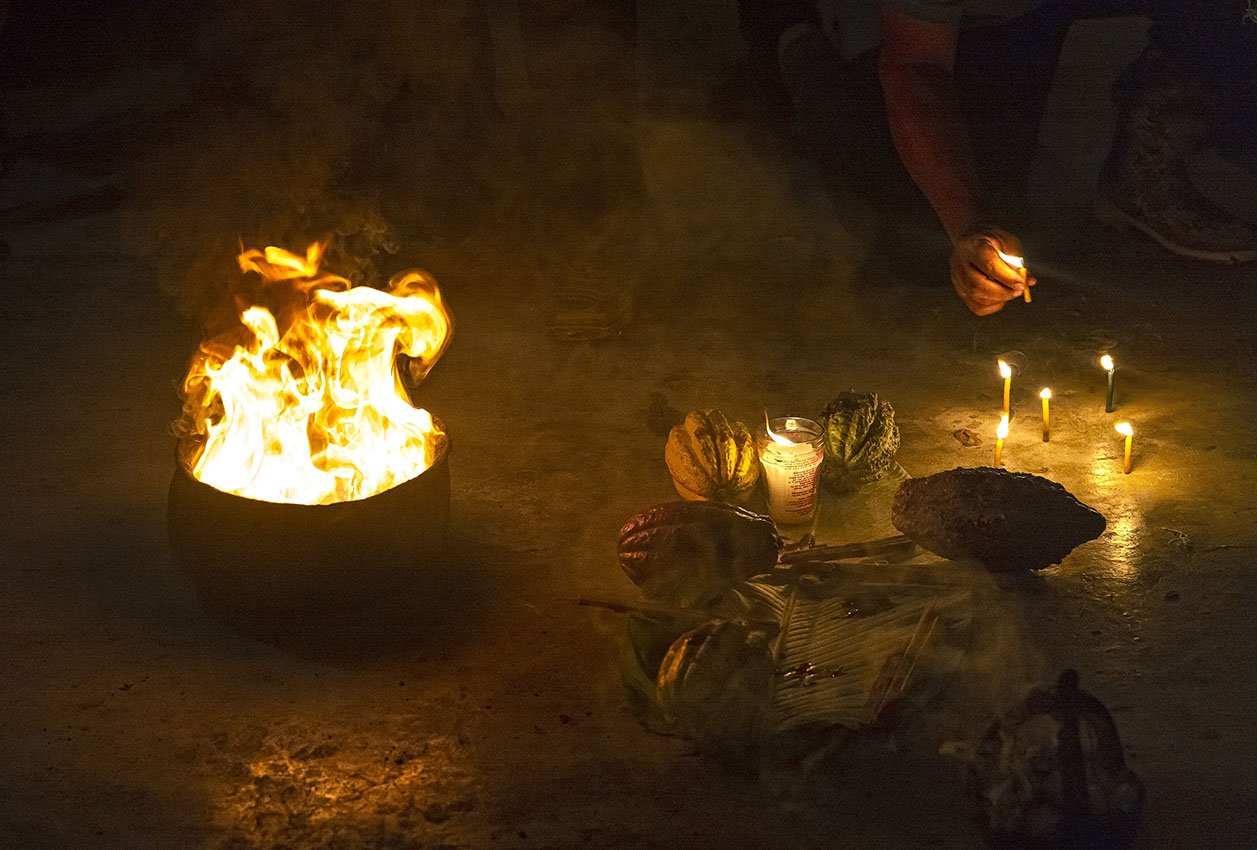
To drink cacao is to remember.
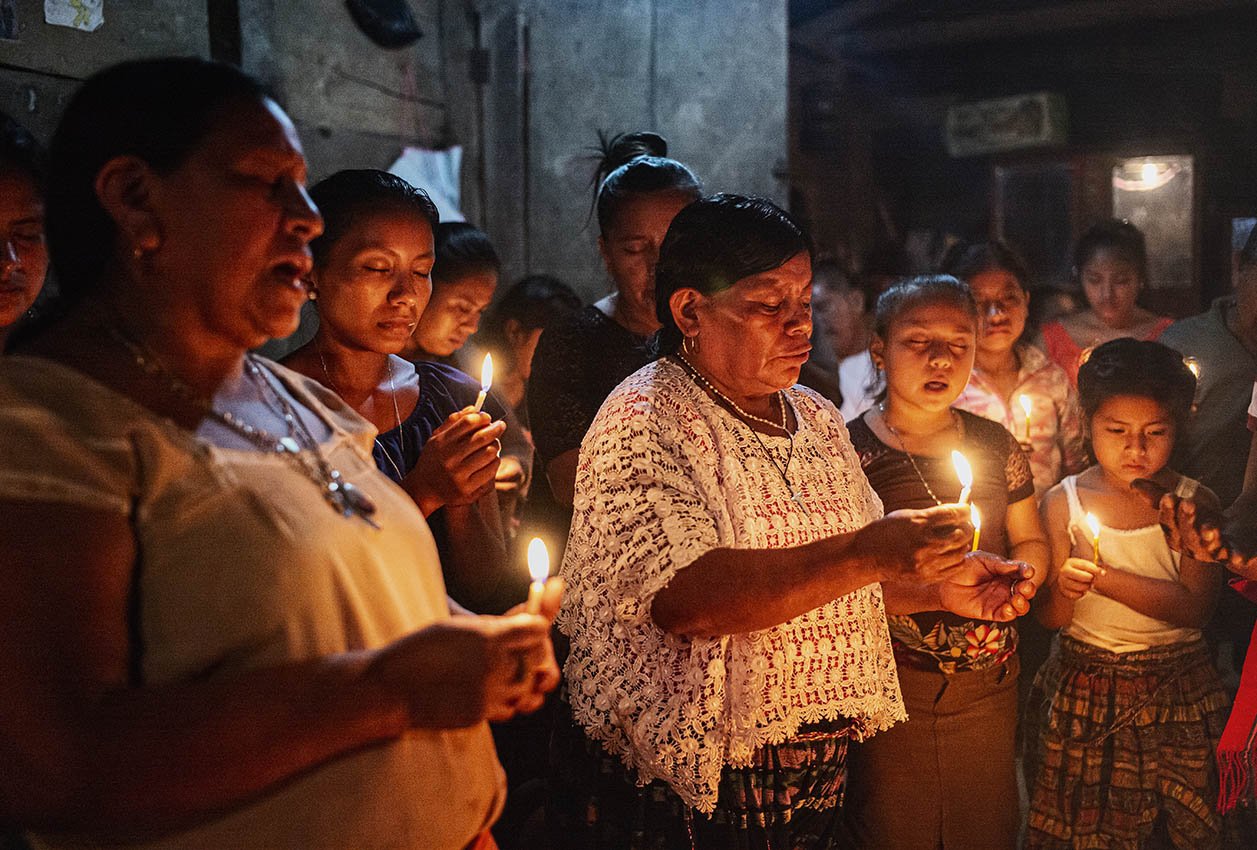
It is said that the spirit of Ixcacao moves through the body, awakening what lies dormant—a quiet light within existence itself. In ceremony, cacao becomes a shared act: emotions surface, are released, and find space to transform. Healing is not imposed, but allowed.
The Maya calendar
These ceremonies are attuned to the energies of the Maya calendar—twenty nahuales that guide each day. Fire, air, water, earth, sun, clouds, mountains, and animals all take part in this spiritual framework. Through them, participants are guided toward forgiveness, understanding, and acceptance. Through them, new spaces of awareness emerge.
Cleansing rituals, such as those performed with Raxpom, accompany the process. Body, memory, and spirit are addressed together.
To drink cacao is also to reconnect—with the ancestors, with the land, with others. It brings clarity, opens the heart, and expands awareness. It allows a deeper understanding of the emotions we carry and offers a path to release them. It is, ultimately, a way of returning.
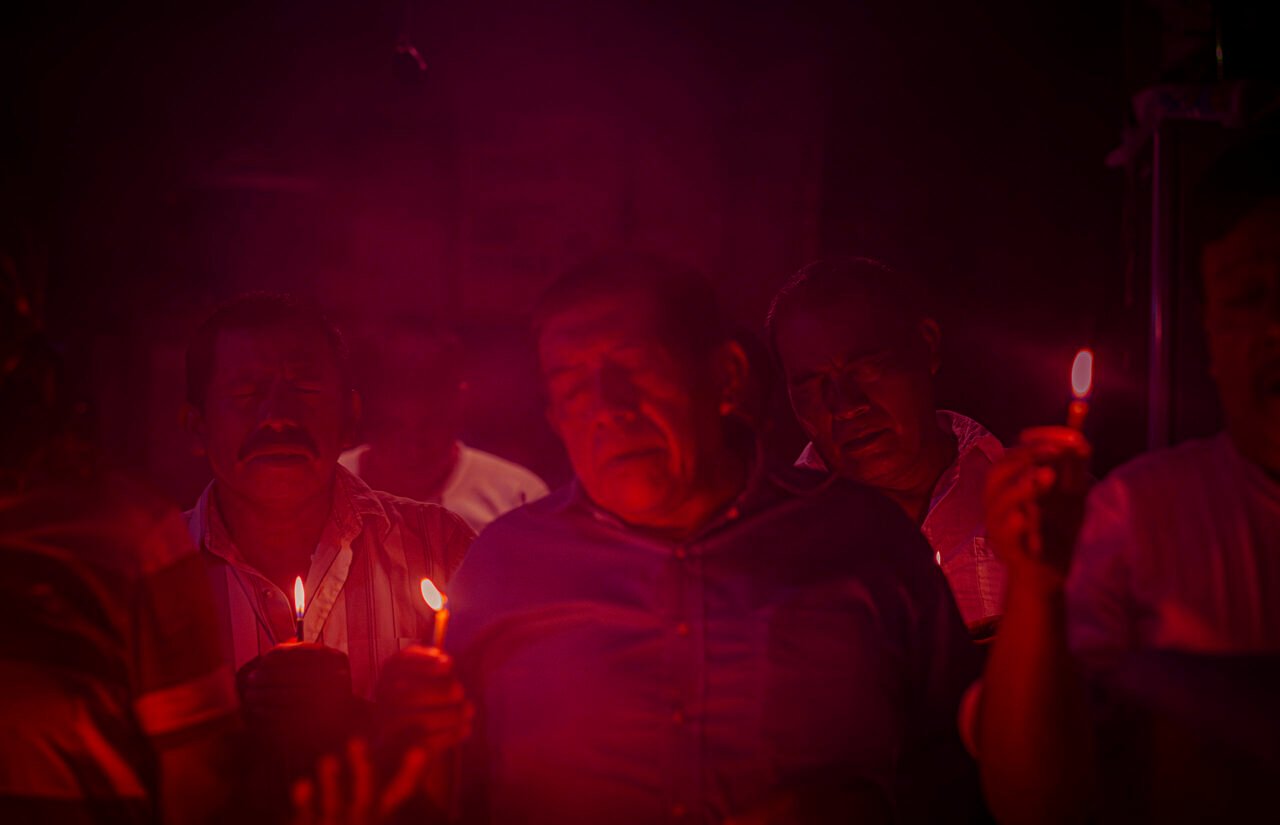
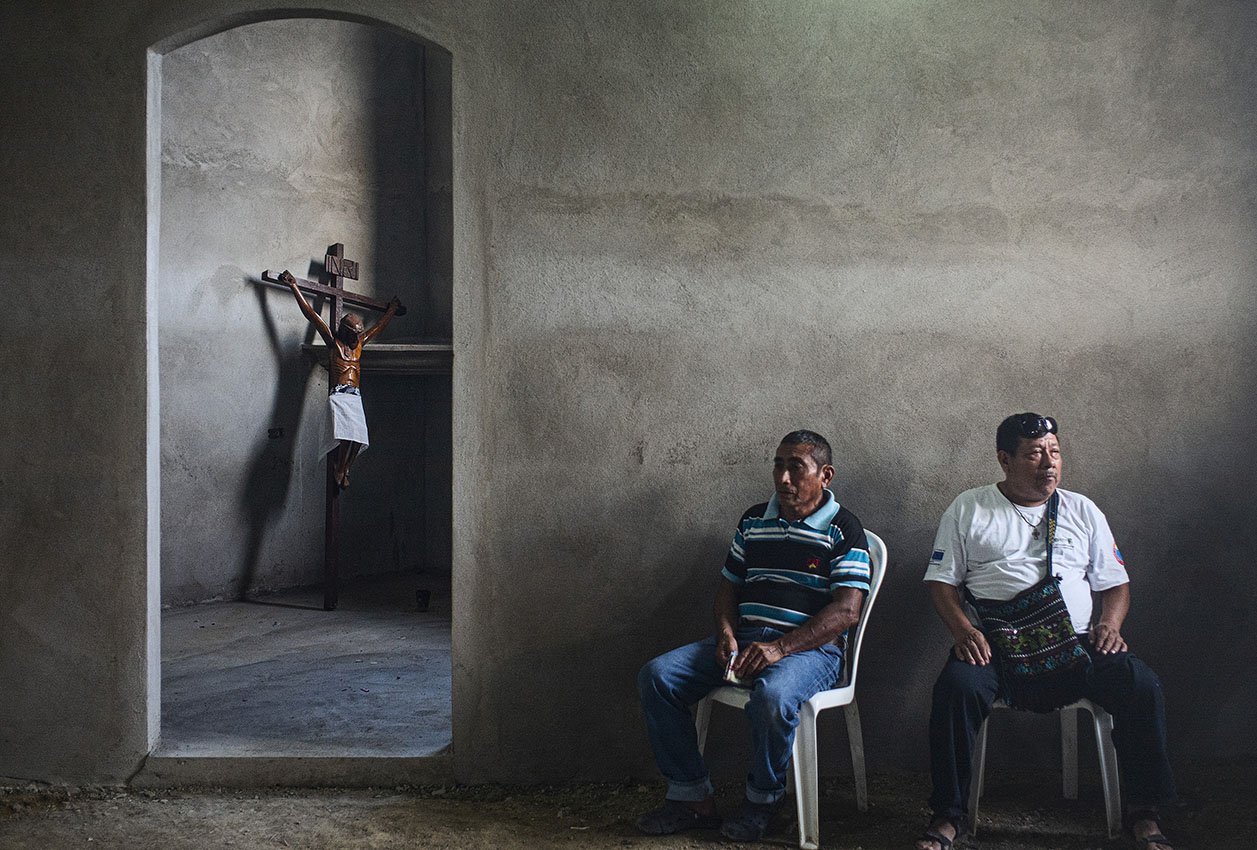
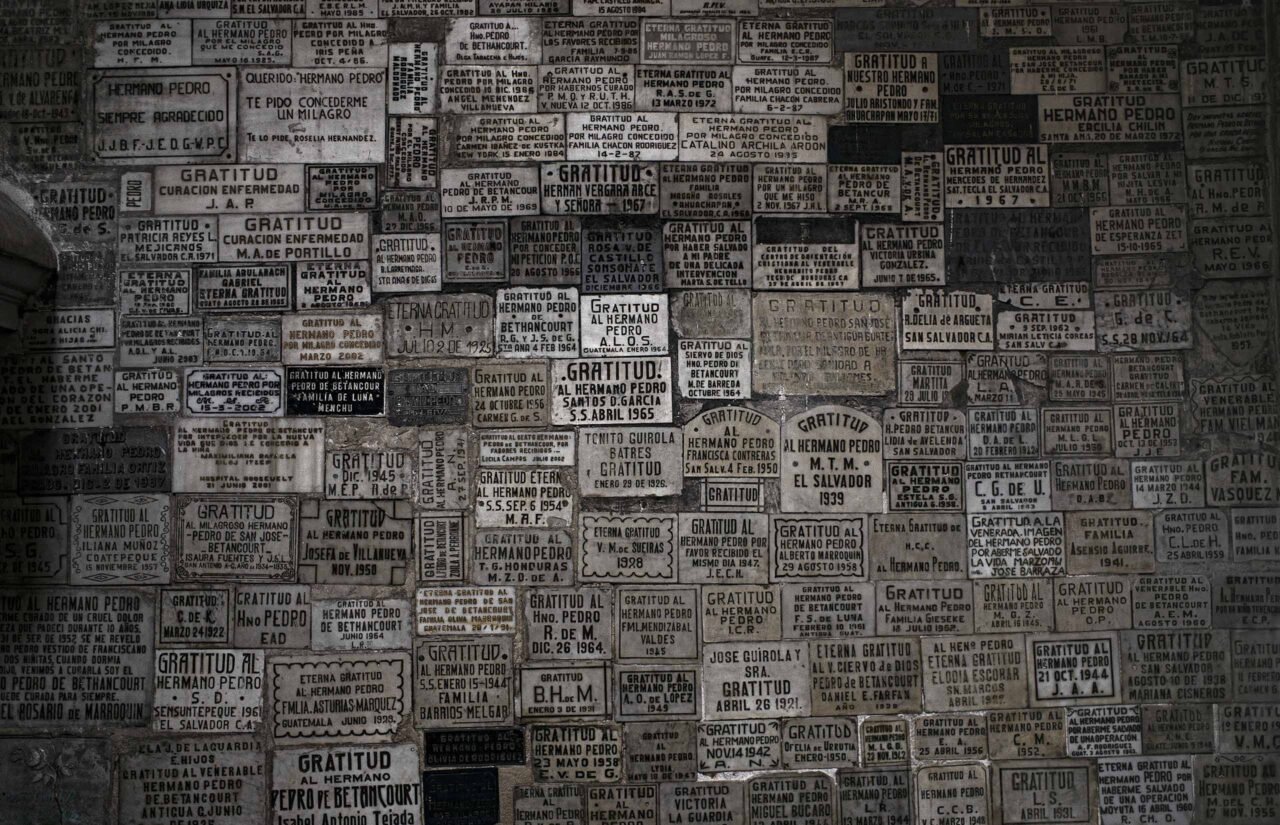
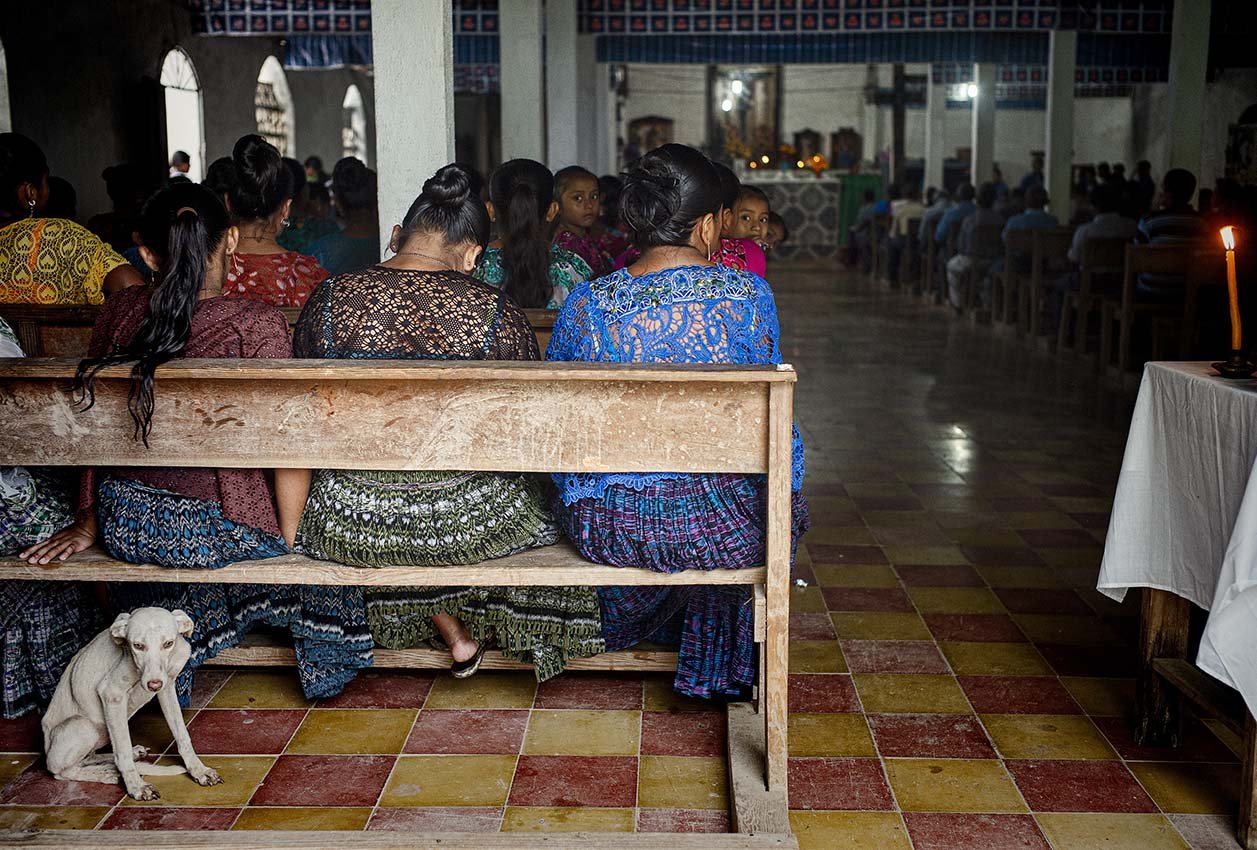
And yet, these same ceremonies coexist with Catholic liturgy. Beneath the image of Christ, prayers unfold in a different language, shaped by another history. But the intention remains unchanged: to ask, to thank, to endure.
Syncretism here is not confusion, but coherence. Not a blending that erases difference, but a layering that sustains it.
For centuries, it has been a strategy of resistance and adaptation—allowing Indigenous communities to preserve their identity while navigating imposed structures. Spirituality was not lost; it was transformed.
What these images reveal is more than ritual. They reveal a way of inhabiting the world: where the sacred circulates between earth and cross, between ancestors and present time; where cacao becomes memory, medicine, and voice; and where, quietly and persistently, a deeper continuity remains.